Design for Manufacturability in CNC Machining: How to Reduce Cost, Risk, and Production Delays
Many manufacturing problems don’t begin on the shop floor—they begin much earlier, when a drawing is released without fully considering how the part will actually be manufactured.
Design for Manufacturability (DFM) is often described as a design methodology, but in practice it’s much more than that. It’s a collaborative review between engineering, manufacturing, sourcing, and quality to identify opportunities that improve production before the first chip is ever cut.
For companies in aerospace, defense, medical device, and industrial manufacturing, those conversations can reduce production risk, improve quoting accuracy, simplify inspection, and help programs move from prototype to production with fewer surprises.
The goal isn’t to redesign parts. It’s to make informed manufacturing decisions before they become expensive.
 What Design for Manufacturability Means in CNC Machining
Design for Manufacturability begins with a simple question:
Can this part be manufactured efficiently, consistently, and repeatedly without compromising its design intent?
A manufacturability review (sometimes referred to as a design review) evaluates more than the CAD model. It considers how geometry, tolerances, material selection, tooling access, fixturing, inspection, and production volume interact throughout the manufacturing process. Small decisions made during design often have a much larger impact once production begins.
This matters because different manufacturing processes have different constraints. A design that works for additive manufacturing, casting, or molding may not translate directly to CNC machining. Every manufacturing process has its own design constraints.
Good DFM ensures the design matches the manufacturing method.
Why Early Manufacturing Input Matters
Every organization looks at manufacturability differently.
Engineering wants to preserve the design intent. Sourcing and procurement teams want predictable costs and reliable suppliers. Quality teams want repeatable production and efficient inspection. Manufacturing wants a process that can be executed consistently.
A design review helps align those priorities before production begins.
Applying DFM early helps teams avoid these problems before they reach the shop floor. It supports process optimization, production readiness, and cost savings by identifying small design changes that can create significant cost savings at scale.
Manufacturing Decisions Hidden Inside Every Drawing
Several design choices consistently increase part complexity, manufacturing time, and supplier risk. These issues often begin in the early stages of the product development process, before manufacturing teams have reviewed the design.
- Overly Tight Tolerances
One of the first questions during a manufacturability review is whether every tolerance is functionally necessary. Tight tolerances absolutely have their place—but applying them where they aren’t required can increase machining time, inspection effort, and overall production cost. - Complex Internal Geometry
Deep pockets, narrow channels, sharp internal corners, and thin walls can increase machining time, require additional setups, or limit tooling options. During a manufacturability review, one of the first questions is whether these features are functionally required or whether a small design adjustment could simplify production while maintaining performance. - Material Selection Without Machinability Review
Choose materials wisely. Stainless steel, aluminum, titanium, tool steel, plastics, and specialty alloys all behave differently during machining. A material may satisfy strength, corrosion, or environmental factors but still create excessive tool wear, heat, vibration, or waste. Reviewing raw material choices early can reduce labor costs, improve surface finish, and support sustainability goals by reducing scrap and material waste. - Lack of Fixturing and Workholding Consideration
Every part must be held securely during machining. Designs that do not allow for stable fixturing can create vibration, distortion, inconsistent dimensions, or poor repeatability. Good DFM considers how the part will be held, how many setups are required, and whether the geometry supports repeatable production. This is especially important as production volume increases. - Assembly Issues Created by the Design
Machined parts are often like puzzle pieces. And just like puzzles, ensuring they go together as planned is important. DFM supports easy assembly by simplifying part interfaces, reducing unnecessary features, and considering whether standard components, modular designs, snap-fit designs, or multi-functional parts can reduce complexity.
What This Means for Your Team
Engineering
- Better manufacturability
- Fewer ECOs
- Earlier supplier feedback
Sourcing
- Better quote quality
- Reduced supplier risk
- Fewer schedule surprises
Quality
- Easier inspection
- Better repeatability
- Lower variation
How DFM Supports Cost Optimization
DFM directly affects the product cost structure. Even small design changes can reduce machining time, inspection requirements, tooling complexity, material waste, and labor costs.
Examples include:
- Relaxing non-critical tolerances
- Increasing internal radii to match standard tooling
- Reducing unnecessary depth-to-width ratios
- Selecting a more machinable material
- Designing for fewer setups
- Simplifying surface finish requirements
- Using standard components where possible
- Reducing part count through multi-functional parts
- Improving access for inspection and easy assembly
These changes may look minor in the design file, but they can create significant cost savings across production runs.
What We’ve Learned
One of the biggest improvements rarely comes from a complete redesign.
More often, it’s a handful of small changes—a radius adjustment, a tolerance review, or a feature relocation—that simplify machining without changing how the part performs.
One pattern we’ve seen repeatedly is that the biggest improvements rarely require a complete redesign. A small adjustment to an internal radius, a review of a non-critical tolerance, or a change to the machining strategy can often reduce production time and improve repeatability without affecting the part’s function. Those conversations are easiest—and least expensive—before the drawing is released.
How DFM Improves Part Quality and Repeatability
DFM is not just about making one successful prototype. It is about producing scalable products consistently over time.
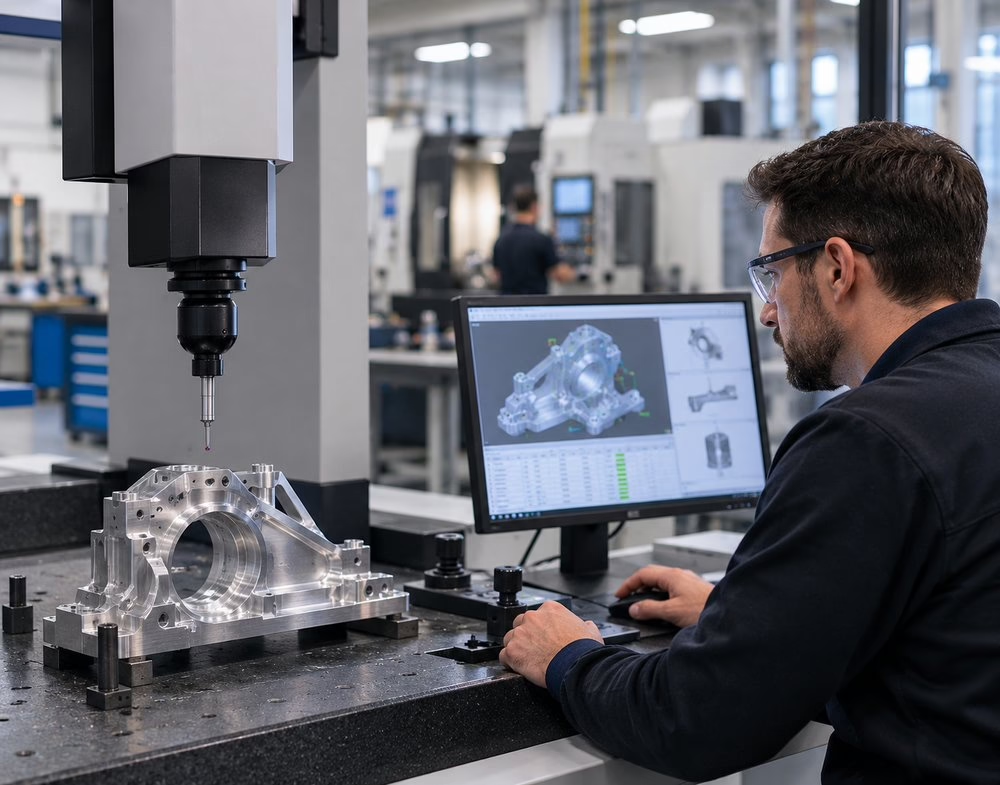
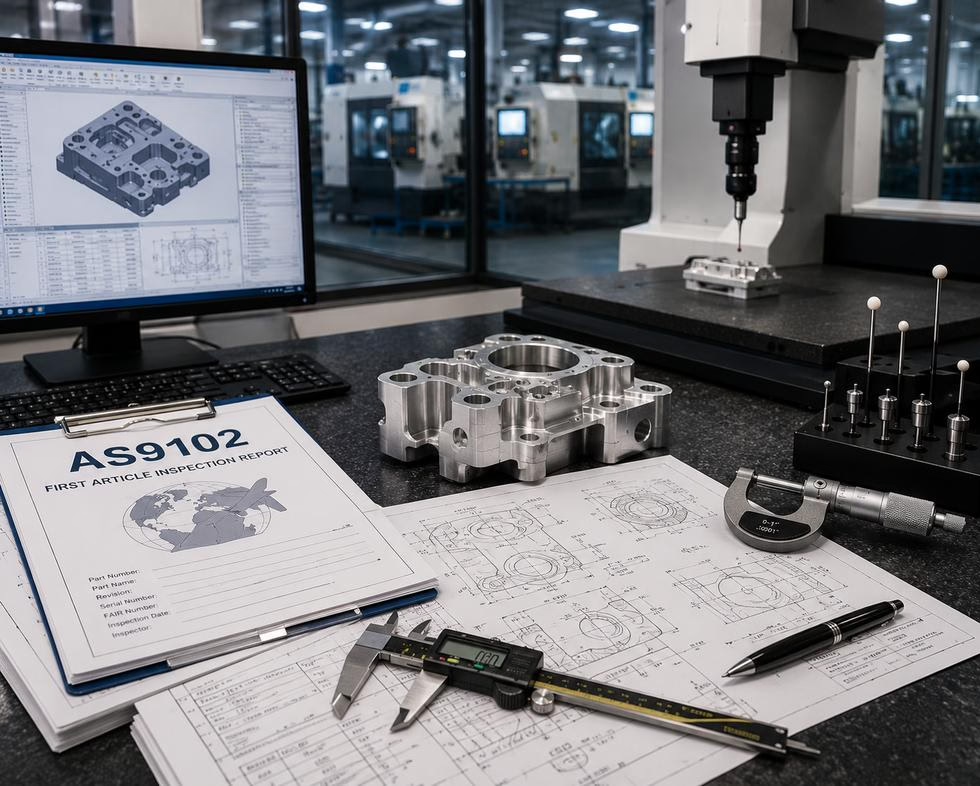
Repeatability depends on stable setups, predictable tooling, controlled material behavior, and realistic design requirements. DFM reduces defect rates by aligning the design with proven machining practices. It supports quality control by making parts easier to inspect, reproduce, and validate.
DFM and Regulated Industrial Applications
In industries such as aerospace, defense, Medical Devices, marine applications, and other compliance-driven markets, manufacturability must support both performance and regulatory compliance. A design may need to meet strict dimensional, material, traceability, documentation, and inspection requirements. DFM helps ensure these requirements are practical to manufacture and verify.
The Role of Technology in Modern DFM
Technology continues to improve how design and manufacturing teams evaluate manufacturability. Simulation software, deep DFM modeling, real-time feedback, Manufacturing Execution System data, and new technology platforms can help identify risks earlier in the process.
However, technology does not replace manufacturing experience. The best results come from combining digital tools with practical manufacturing expertise.
Five Questions to Ask Before Releasing a Drawing
- Can this part be fixtured securely and repeatably?
- Are all specified tolerances functionally necessary?
- Will critical features be accessible for machining and inspection?
- Does the selected material balance performance with manufacturability?
- Has an experienced manufacturing partner reviewed the design?
When to Involve a Machining Partner
One of the most effective ways to apply DFM is to involve a machining partner before the design is finalized.
Early collaboration gives engineers and procurement teams access to practical feedback on geometry, tolerances, material selection, fixturing, inspection, and production strategy. This helps prevent cost overruns and reduces the need for redesign later in the process.
A qualified machining partner can help determine whether a part is ready for prototype, low-volume production, or scaled manufacturing. That feedback gives design teams and supply chain teams a production advantage because they can make informed decisions before committing to tooling, materials, or supplier capacity.
The best design reviews happen before the RFQ is finalized—not after the first quote comes back higher than expected.
Why This Matters to Engineering, Sourcing, and Quality
DFM affects more than the engineering department. It influences the entire supply chain.
For procurement teams, DFM can improve quoting accuracy, reduce supplier risk, and support lower costs. For production teams, it improves readiness and reduces troubleshooting. For quality leaders, it improves repeatability and inspection efficiency. For program managers, it reduces schedule risk and helps prevent avoidable delays.
For companies focused on product innovation, DFM helps protect momentum. Instead of slowing the next project with redesign loops and manufacturing surprises, teams can move through the product development process with greater confidence.
Manufacturing Experience Matters
Every manufacturing team develops practical insights that don’t appear on engineering drawings. After reviewing thousands of machined components, we’ve found that early collaboration often identifies opportunities to simplify production, improve repeatability, or reduce machining complexity—without changing the part’s intended function.
That’s the value of a manufacturability review. It helps teams make informed decisions before production begins.
With engineering and prototype services, precision CNC machining, and production manufacturing capabilities, Borg Design helps customers move from concept to scalable production with fewer surprises.
Before You Release the Next Drawing
If you’re developing a CNC machined component, a design review can help identify production challenges before they become schedule delays, quality issues, or unnecessary cost.
Whether the recommendation is to adjust a tolerance, simplify a feature, or confirm that the current design is ready for production, the objective is always the same: help your team move forward with greater confidence.
If you’d like another set of experienced manufacturing eyes on your next design, Borg Design can help review the part before production begins.
Contact Borg Design to request a manufacturability review. Whether you’re developing a prototype or preparing for production, an early manufacturability review can help your team move forward with greater confidence and fewer surprises.
Frequently Asked Questions About DFM in CNC Machining
What is design for manufacturability in CNC machining?
Design for manufacturability in CNC machining is the process of designing parts so they can be produced efficiently, consistently, and without unnecessary complexity, cost, or production risk.
Why is DFM important for engineers and supply chain teams?
DFM helps engineers improve part quality and helps supply chain teams reduce supplier risk, cost overruns, lead time problems, and production delays.
When should DFM be applied?
DFM should be applied during the early design stages and revisited throughout the product development cycle. The earlier manufacturability is considered, the easier it is to make cost-effective design changes.
How does DFM reduce machining cost?
DFM reduces cost by minimizing unnecessary tolerances, simplifying geometry, reducing setups, improving material selection, lowering labor costs, reducing material waste, and shortening machining time.
What are common DFM mistakes in CNC machining?
Common mistakes include overly tight tolerances, complex internal geometry, poor material selection, lack of fixturing consideration, unnecessary surface finish requirements, and designs that create assembly issues.
How does DFM improve part quality?
DFM improves part quality by making parts easier to machine, inspect, reproduce, and control. This reduces defect rates and improves repeatability across production runs.
Can DFM help with compliance requirements?
Yes. In regulated industries such as aerospace, defense, marine, and Medical Devices, DFM helps ensure that parts can be manufactured and inspected in ways that support compliance and regulatory requirements.
What role does a machining partner play in DFM?
A machining partner provides practical feedback on geometry, tolerances, materials, tooling, fixturing, inspection, and production readiness before the design is finalized. Early input helps reduce risk and improve manufacturability.